A high-mileage car isn’t automatically a bad purchase. We’ve seen vehicles with well over 150,000 miles that were cared for properly and still had plenty of useful life left. We’ve also seen lower-mileage cars with neglected fluids, worn suspension parts, hidden leaks, and years of delayed repairs.
That’s why the odometer only tells part of the story. A pre-purchase inspection looks at how the vehicle has actually aged, what has already been repaired, and what you may need to spend after buying it. On an older car, those details can be far more useful than mileage alone.
Service History Can Tell You How the Car Was Treated
Before we even get deep into the mechanical checks, maintenance records can provide valuable context. Regular oil changes, cooling system service, transmission fluid work, brake repairs, and documented timing belt replacement show someone paid attention to the vehicle rather than waiting for parts to fail.
Missing records don’t automatically mean the car was neglected, but they leave more questions. If a 140,000-mile vehicle has no proof that its timing belt, spark plugs, or drivetrain fluids were ever serviced, you may need to factor those items into the purchase price. Regular maintenance history can make a high-mileage car much easier to evaluate.
Leaks Often Tell You More Than the Odometer
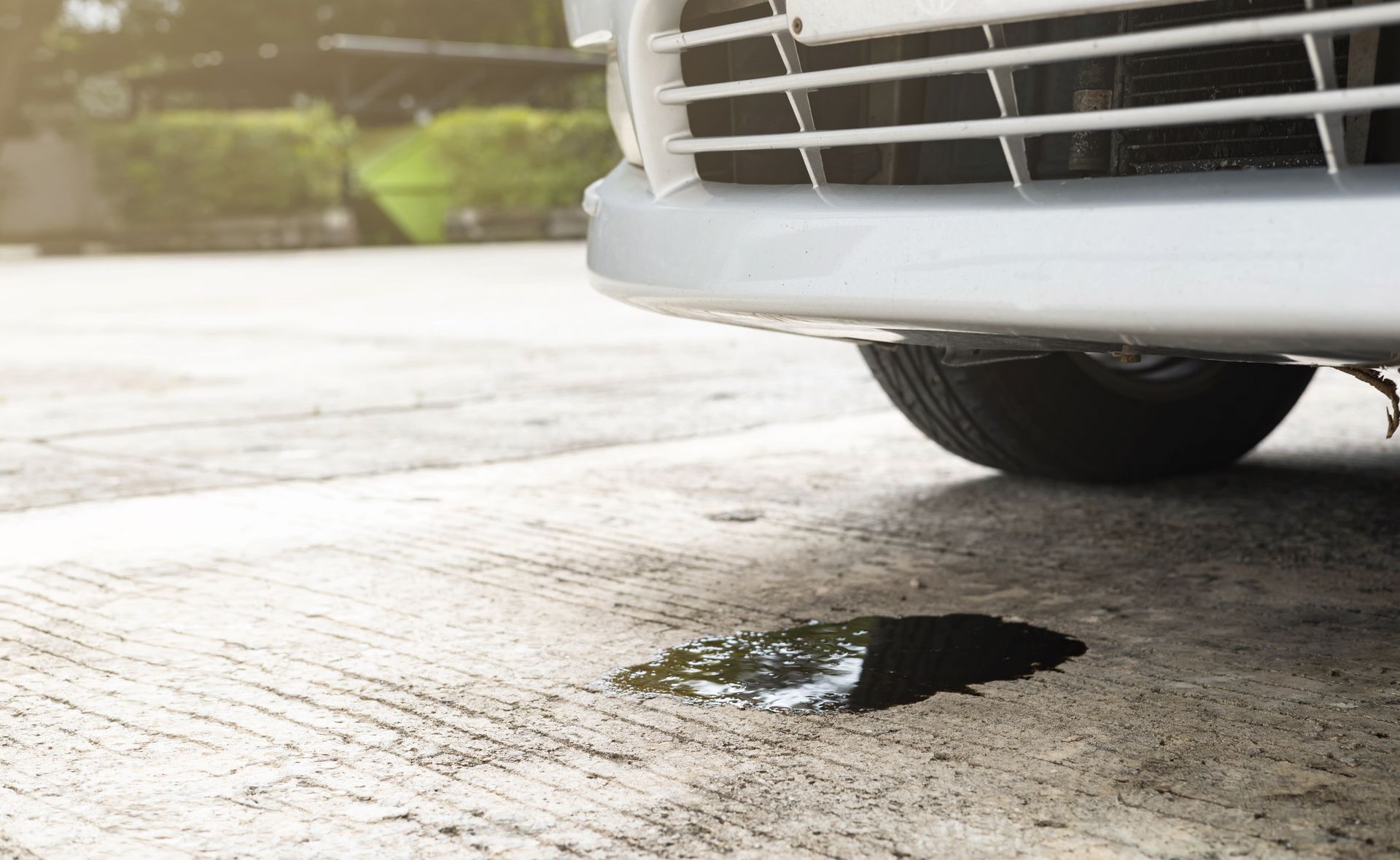
Older engines and transmissions commonly develop some seepage, but there’s a big difference between a slightly damp gasket and a leak that leaves the underside coated in fluid. We look for the highest fresh point because oil can travel a long way once the vehicle is moving.
A high-mileage inspection may uncover:
- Valve cover or oil pan leaks
- Coolant residue around hoses or the water pump
- Transmission fluid around seals or cooler lines
- Power steering leaks on vehicles with hydraulic systems
- Differential or transfer case seepage
- Fresh fluid that appears to have been recently cleaned away
None of these automatically means you should walk away. What matters is the severity, repair cost, and whether several leaks are showing up at the same time.
Suspension Wear Can Be Expensive When It Adds Up
A car can drive reasonably well even when several suspension parts are near the end of their life. Worn struts may still control the vehicle in normal traffic, while aging control arm bushings or sway bar links only make noise on rough pavement.
That’s why a road test and lift inspection work well together. We look for loose ball joints and tie rods, cracked bushings, leaking shocks or struts, wheel bearing play, broken springs, and uneven tire wear. One worn link isn’t a major concern on its own. Four worn suspension components, plus a set of tires and an alignment, can quickly change the value of the deal.
Brake Condition Goes Beyond Pad Thickness
Sellers sometimes advertise that a vehicle has new brakes, but that can mean different things. New front pads don’t tell you whether the rear brakes are worn, the rotors are heavily rusted, a caliper is sticking, or the brake fluid has been ignored for years.
We check pad thickness, rotor condition, caliper movement, hoses, lines, and signs of uneven wear. In areas where corrosion is common, the metal brake lines and mounting points deserve a close look. A vehicle that stops well during a five-minute test drive can still have brake work coming soon.
The Engine and Transmission Need a Real Road Test
Some problems won’t show up while the car is idling in a parking space. An engine may feel fine until you ask it to accelerate uphill. A transmission can shift cleanly when cold and begin slipping or shifting harshly after 20 minutes of driving.
During a pre-purchase road test, we pay attention to:
- Cold and warm starting behavior
- Idle quality
- Acceleration under load
- Transmission engagement into drive and reverse
- Shift quality through several gears
- Vibration at different speeds
- Steering pull or wandering
- Warning lights that appear only after driving
Those details help separate normal age from a car with a drivability problem that's about to get worse.
Tires Can Reveal Problems the Seller Didn’t Mention
Tires tell a useful story if you look across the entire tread. Heavy inner-edge wear can point toward alignment or suspension trouble. Cupping can show up with worn shocks, loose parts, or balance problems. Four different tire brands or badly mismatched tread depths may also suggest the car has been maintained one tire at a time.
We also check tire age, sidewall condition, and whether all four tires are appropriate for the vehicle. On an all-wheel-drive car, major differences in rolling circumference deserve extra attention because they can put unnecessary load on the drivetrain.
A Good Inspection Helps You Decide, Not Just Find Faults
The purpose of a pre-purchase inspection isn’t to make every used car sound bad. High-mileage vehicles are going to have some wear. The useful part is knowing whether you’re looking at normal aging, overdue maintenance, or several expensive repairs stacked together.
A car with 160,000 miles, good records, dry major components, even tire wear, and a solid road test may be a much better buy than a 90,000-mile car with poor history and obvious neglect. The inspection gives you enough information to make that comparison before the title is in your name.
Get a Pre-Purchase Inspection In Columbia, SC, With Team One Suddeth Automotive
If you’re considering a high-mileage used car, Team One Suddeth Automotive in Columbia, SC, can check the engine, transmission, brakes, suspension, tires, fluids, leaks, and other areas that can affect what the vehicle will cost you after the purchase.
Contact us to schedule a pre-purchase inspection before you commit to the vehicle.